North Providence homes, old and new
North Providence was incorporated in 1765, and in the 1800s several mill villages grew up within its borders. In Lymansville, the original core was multi-family housing built by the mill company, and some of those houses still stand next to homes built privately in the late 1800s and early 1900s. Allendale's old mill was converted to condominiums in the 1980s.
Today the town mixes those older pockets with 20th-century streets of single-family houses and with condominium buildings. That variety means a single leak might affect one family, two households in a two-family house, or several owners who share walls and floors.
Common indoor causes of water damage
- Bathroom leaks: failed caulk around a tub, a cracked shower pan, or a toilet seal that lets water into the floor.
- Unit-to-unit leaks in condominiums, where a washing machine or water heater in one home can damage the ceiling of another.
- Older plumbing in mill-era multi-family houses, where repairs have piled up over generations.
- Basement water heaters and sump pumps in single-family homes.
- Garage and crawlspace plumbing that splits once it has frozen.
Bathroom mold and what it tells you
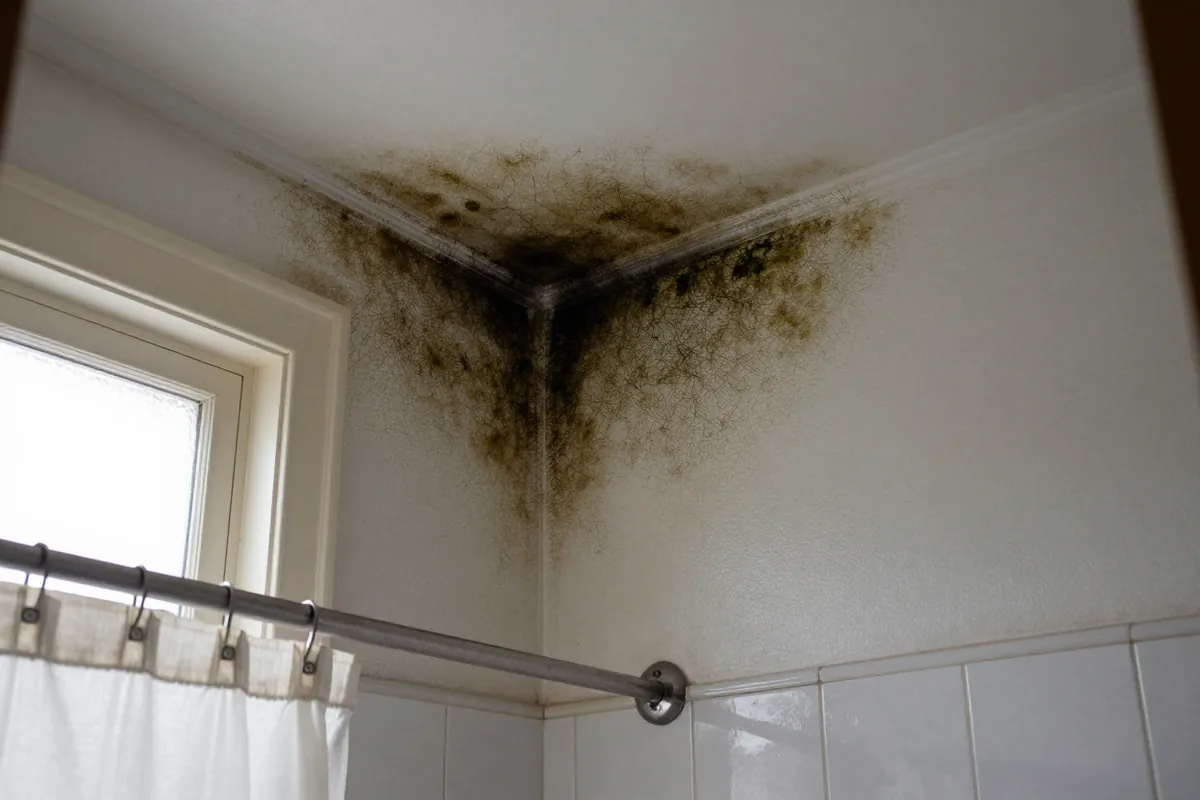
Mold in the upper corner of a bathroom, like the photo above, usually points to steam with nowhere to go. Many older bathrooms either lack an exhaust fan or have one that doesn't vent outdoors. Over time, moisture soaks into the paint and drywall at the coolest spot in the room, often a ceiling corner on an outside wall.
If cleaning doesn't keep it away, something else may be going on: a slow leak from a fixture above, missing insulation in that corner, or damp material behind the surface. That's when a moisture check by a professional makes sense.
First steps for condo owners and homeowners
- Stop the water in your own space by closing the fixture valve or your unit's shutoff, if it has one.
- Condo owners: notify the association or property manager. If the leak came from another unit or a shared pipe, they need to know, and your condominium documents may spell out who handles which repairs.
- Knock on the neighbor's door if water is coming from above, so they can shut off their supply.
- Air out a moldy bathroom and don't dry-scrub a large patch, which can spread spores.
- Photograph everything and tell your insurance company. Renters should contact their landlord or property manager.
Connecting with an independent provider
This site doesn't do repair work and has no office in North Providence. Its phone line connects homeowners here with participating independent providers that accept jobs in town, when one is available. The provider handles the inspection and the price directly with you. See how the service works.
How cost varies
A mold patch in one bathroom corner and a leak that has run through two condo units are very different jobs, and so are their prices. The mold remediation cost guide and the water damage restoration cost guide lay out general national estimates; the provider prices your situation after an inspection.
North Providence questions
Water came through my condo ceiling from the unit above. Who pays for the repairs?
That depends on where the leak started, your condominium documents, and the insurance involved, including the association's master policy and your own. Notify the association and your insurer and keep photos. A provider can repair the damage, but who pays is settled among the owners, the association, and the insurers.
Can I clean bathroom mold myself?
For a small area, generally yes. Wear gloves and an N-95 mask, wash the surface with detergent and water, dry it completely, and run the exhaust fan. If the patch is larger than about 10 square feet, keeps returning, or the drywall underneath feels soft, it's time for a professional.
City pages close by
For homeowners near North Providence, these guides are also available: