Cranston's older and newer homes
In northeastern Cranston, Edgewood grew from farmland and country houses into a streetcar and early automobile suburb. Its historic districts include Colonial Revival houses, bungalows, four-squares, and Dutch Colonial Revival homes, built mostly in the first half of the 20th century. Knightsville, Auburn, and Pawtuxet Village add their own mix of older houses.
West of Interstate 295 the city turns semirural, and that section has seen a lot of new house construction in recent years. Those homes have newer plumbing, but they also tend to have more water-using appliances, larger finished spaces, and a sump pump in the basement.
Indoor water damage, east and west
In the older eastern neighborhoods, look out for:
- Original supply pipes, where they haven't been replaced, that corrode and begin weeping at the threads
- Radiator valves and boiler connections in homes still heated with hot water
- Water heaters squeezed into small basements, where a slow leak hides behind stored items
In newer houses in western Cranston, the usual suspects are different:
- Refrigerator ice-maker lines and dishwasher connections behind finished cabinetry
- Sump pumps that stop because of a stuck float switch or a tripped circuit
- Second-floor laundry rooms, where a split washer hose drains straight into the ceiling below
Water damage in Cranston homes: what restoration involves
Restoring a water-damaged house follows the same basic order in any part of Cranston: find and stop the source, remove standing water, dry the structure, and repair what can't be saved. What changes from one neighborhood to the next is the material the water soaks into.
In Edgewood and the other older eastern neighborhoods, many houses date from the first half of the 20th century, so a provider may be working with plaster ceilings, wood floors, and painted trim rather than drywall and carpet. Wood flooring can sometimes be saved if drying starts soon, though boards that have cupped badly may have to come up. A plaster ceiling under a bathroom deserves a close look, because water can pool above it where no one can see.
In the newer subdivisions west of Interstate 295, a finished basement is often where the cost builds up. Carpet pad, the bottom of the drywall, and insulation near the floor usually have to be cut out once they've absorbed water. Whatever the age of your house, ask for the moisture readings taken at the start and at the end of drying, so you know the structure is dry inside and not only on the surface.
Mold risks by type of house
In an early 1900s bungalow or four-square, mold often starts in the basement along cool foundation walls, or in a bathroom that was updated without a fan vented to the outside. Plaster and old paint can hold moisture for a long time after a leak.
In a newer house the risk is more often hidden: a slow drip behind a dishwasher, or dampness in a finished basement that soaks into carpet and drywall before anyone notices. A musty smell in a room that looks clean is often the first clue.
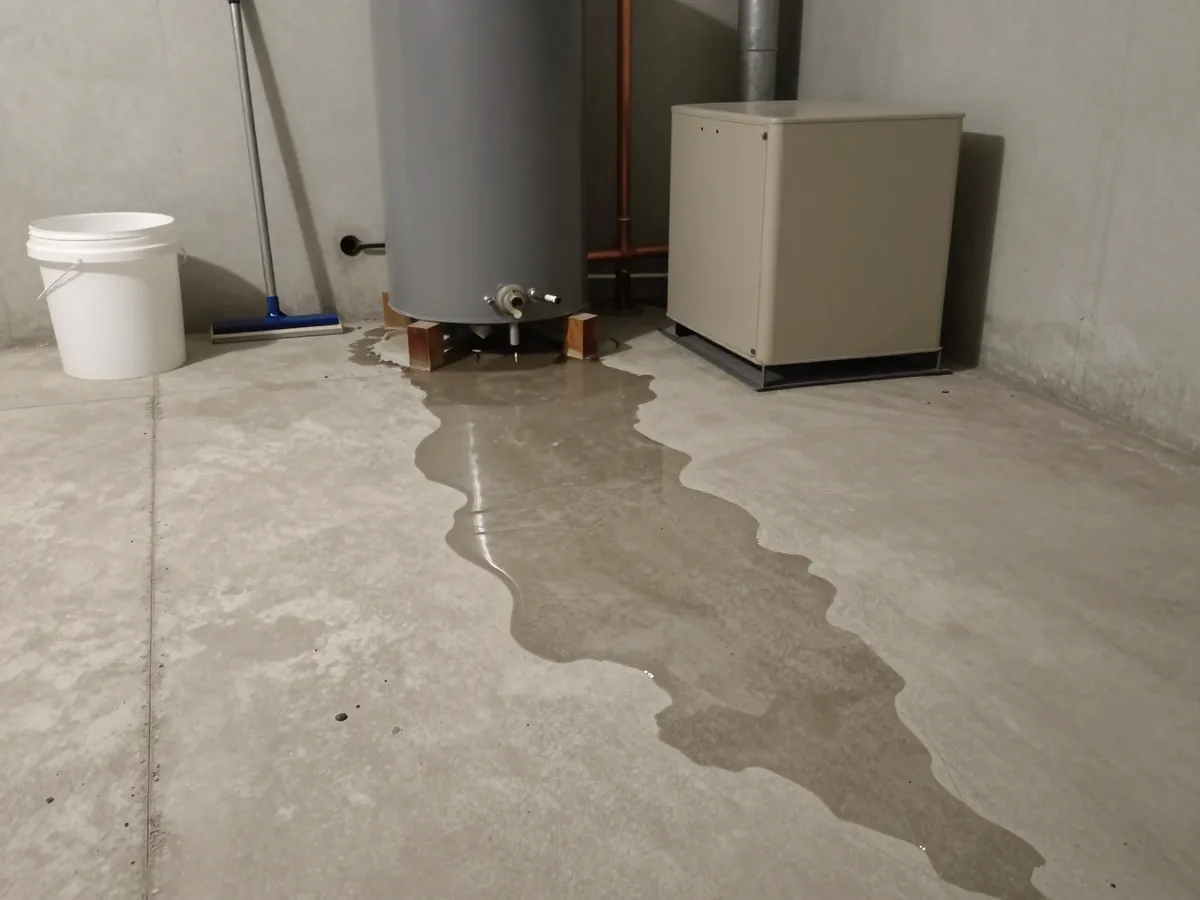
If your water heater is leaking
- Shut off the cold-water supply to the tank. The valve is usually on the cold-water pipe running into the heater.
- Turn off its energy source. For an electric heater, switch off its breaker. For a gas heater, follow the instructions on the tank's label. If you smell gas, leave the house and call the gas utility from outside.
- Move belongings away from the water, and if the floor is bare concrete, push water toward a floor drain with a squeegee if it's safe.
- Check under nearby finished rooms. Water from a utility area can travel under walls into carpeted spaces.
- Document it and report it to your insurance company, keeping any receipts.
In a rented house, the owner decides on repairs, so tenants should call the landlord first.
How the referral works
We don't inspect homes or do repairs, and there's no Cranston office. What we offer is a phone line: you call, answer a couple of routing questions if asked, and are connected with a participating independent provider when one is available for your address. That provider works out the details with you directly. More on how it works.
Budgeting for repairs
Replacing a water heater is a plumbing cost; drying and repairing what the water touched is a separate restoration cost. Our water damage restoration cost guide covers general national ranges for that second part, and the mold remediation cost guide covers mold removal. Treat both as planning figures, not quotes.
Cranston questions
My house in western Cranston is only a few years old. Can it still have water damage?
Yes. Newer homes have fewer aging pipes, but they usually have more appliance connections, and features like finished basements and upstairs laundry rooms put more of the house at risk when a hose or fitting lets go.
What should I do if a radiator or boiler pipe is leaking?
If you can do it safely, switch off the boiler, close the valve at the radiator, and catch the water with towels or a pan. A heating contractor repairs the system itself. If water has soaked floors or ceilings, a restoration provider can dry and repair that damage.
Does the phone line cover Pawtuxet Village?
Yes. Pawtuxet Village is split between Cranston and Warwick, and homeowners on either side can call. Provider availability can vary by address.
How can I tell whether water got inside my walls after a leak?
Look for paint that bubbles or peels, baseboards that pull away from the wall, drywall that feels soft near the floor, or a musty smell in the room. A restoration provider can confirm it with a moisture meter or a thermal camera, which pick up wet areas you can't see from the surface.
Other city pages nearby
Cranston shares borders with several cities that have their own guides: